
0161 713 1730
Workforce Assured: Stronger Partnerships. Better Protection. Greater Confidence to Grow.

Workforce Assured: Stronger Partnerships. Better Protection. Greater Confidence to Grow.

Workforce Assured: Stronger Partnerships. Better Protection. Greater Confidence to Grow.

New Red Planet is proud to be Workforce Assured accredited. We believe the greatest value comes from putting those standards into practice together, through partnerships that protect workers, strengthen compliance and support sustainable growth.

Behind every project is a workforce. Behind every worker is a chain of businesses responsible for how they are recruited, engaged, supported and paid.

When those businesses work well together, workers receive clearer information, clients gain greater confidence and suppliers have a stronger foundation for delivering their services.

That is why Workforce Assured matters to NRP, and why we want to build relationships with fellow accredited contractors, recruitment agencies and supply-chain partners.

WHY: Your people deserve protection. Your business deserves confidence.

Businesses should be able to focus on delivering projects, supporting clients and developing their teams, with confidence in the arrangements behind their workforce.

Workers should understand who engages them, how their pay works and where to turn when they need support.

Achieving that takes clear responsibilities, dependable processes and partners who are prepared to demonstrate how they operate.

Workforce Assured focuses on ethical, transparent and fair labour practices within the built environment. Its accreditation includes audit protocols for contractors, agencies and umbrella suppliers, examining the controls behind worker engagement across different tiers of the supply chain.

That matters because a worker’s experience is shaped by more than one organisation. The standards set by a contractor need to carry through to the agency supplying the worker and the intermediary processing their pay.

At NRP, our purpose is to take payroll pressure off our partners and support the people their businesses depend on.

Our Workforce Assured accreditation reflects our commitment to that purpose. It gives fellow accredited businesses a shared starting point for discussing expectations, evidence and how we can work together.

HOW: Make shared standards part of everyday delivery.

A strong partnership connects the promises made during procurement with what happens when a worker starts an assignment, receives a payslip or raises a question.

That means agreeing who does what, providing understandable information and dealing with issues promptly.

Workforce Assured supports this wider approach through three complementary areas:

  • Accreditation: assessing labour-management practices and identifying improvements.

  • The Academy: training, guidance and consultancy for different parts of the supply chain.

  • Specialist audit and compliance services: examining how arrangements operate through ongoing checks.

The Academy includes support for policies, procedures, procurement and governance, alongside training for contractors, agencies, umbrella businesses and workers. Accreditation and Academy services are distinct offerings.

Workforce Assured’s specialist tools also look beyond company-level assurances. Worker interviews explore the experience of people on projects, while documentation audits can examine payslips, contract terms, competency records and right-to-work evidence.

These services help businesses test whether their processes are reaching the workforce in practice.

For NRP, this reinforces a principle we value: confidence is stronger when it is supported by evidence.

We want our partnerships to have clear onboarding arrangements, appropriate payroll processes, accessible support and useful information that helps each business understand its part in the supply chain.

Why partnerships between accredited businesses matter

If your business is already Workforce Assured accredited, you have invested in examining your practices and demonstrating your commitment.

The next question is how your partners help you maintain those standards as your workforce and client commitments grow.

Working with another accredited business creates a useful foundation. It gives both parties a recognised framework for discussing labour practices, while leaving room to examine the specific service, responsibilities and evidence required.

Strengthening compliance

Clear handovers between contractor, recruiter and payroll provider can help reduce gaps, duplicated work and uncertainty.

Agreeing the engagement model, onboarding requirements, payroll deadlines and escalation process early makes the relationship easier to manage.

Accreditation supports this conversation. Ongoing due diligence and each organisation’s responsibilities remain essential.

Supporting worker protection and wellbeing

Workers benefit when their terms and pay are understandable, questions have a clear route to resolution and concerns are taken seriously.

Labour assurance complements the site’s health and safety arrangements by bringing attention to employment practices, worker experience and relevant documentation. It forms one part of protecting a workforce.

Creating a stronger foundation for growth

As a business grows, its processes need to keep pace with more workers, more locations and greater client expectations.

A capable payroll partner can support that expansion without placing every additional processing task on the contractor’s or agency’s internal team.

Workforce Assured also describes its accreditation as a shared assessment model that can reduce duplicate audits for clients using the standard. Its stated benefits include supporting suppliers’ work-winning activities by helping them meet client compliance requirements.

Our view is that shared standards, clear responsibilities and dependable delivery create better conditions for lasting commercial relationships.

WHAT: NRP’s payroll support for your business and supply chain

NRP works with contractors, recruitment businesses and end clients to understand their workforce arrangements and identify the appropriate payroll service.

Our services include:

  • Umbrella payroll for suitable temporary-worker arrangements.

  • PEO PAYE for agency partners seeking a PAYE option with NRP acting as the employer.

  • Managed payroll bureau services for businesses retaining employment responsibility while outsourcing agreed payroll processing.

  • CIS processing for engagements assessed as suitable for that model.

  •  

We begin by understanding your current arrangements, your client requirements and where your team needs support.

From there, we agree a practical process covering onboarding, information exchange, payroll and queries, with responsibilities clearly defined between the parties.

The aim is straightforward: give your business dependable payroll support and more capacity to focus on serving clients and delivering work.

Fellow Workforce Assured accredited businesses: let’s put our shared standards to work.

If you are a contractor, recruitment agency or supply-chain business within the Workforce Assured community, we would welcome a conversation.

You may be reviewing your payroll arrangements, preparing for growth or looking for a partner who understands the standards your clients expect.

NRP can explore where our services fit, what support your team needs and how we can build a relationship that works for your business and its workforce.

We share a commitment to better labour practices. Let’s discuss how we can deliver them together.

Contact Steve McDermott, Business Development Manager

Email: steve.mcdermott@newredplanet.com
Telephone: 07854 881 220


Get In Touch

Data Consent

14 + 6 =

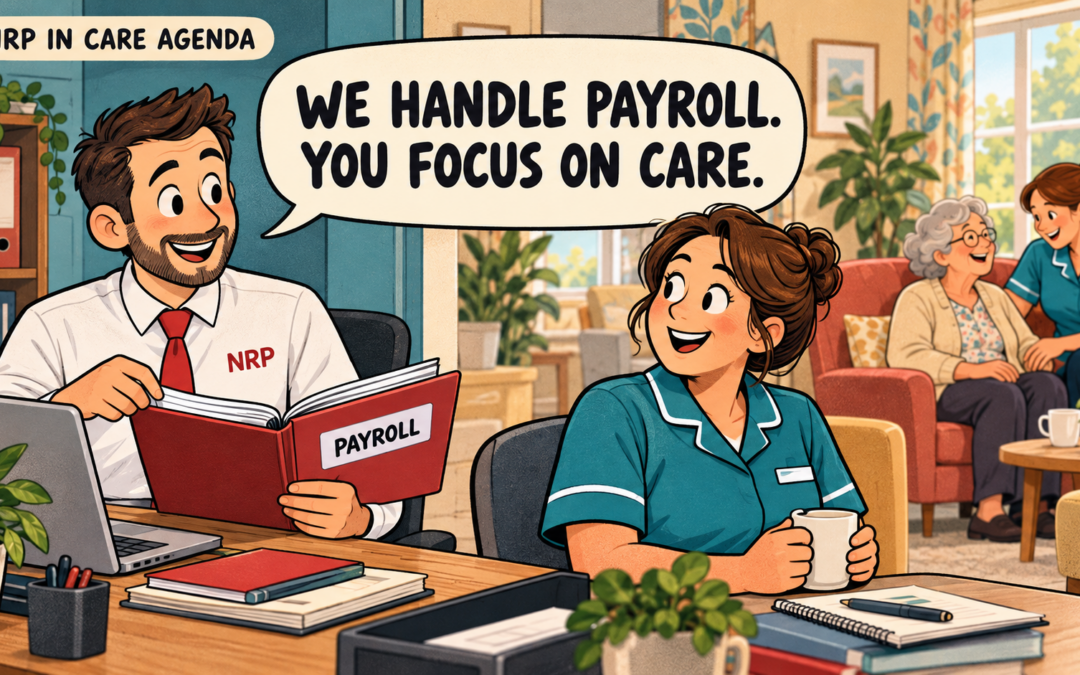
NRP Featured in Care Agenda: Taking Payroll Pressure Off Care Providers

NRP Featured in Care Agenda: Taking Payroll Pressure Off Care Providers

NRP featured in Care Agenda: taking payroll pressure off care providers

New Red Planet’s Chief Commercial Officer, Damian Wasey, explores how payroll affects staff confidence, management time and workforce stability in the September 2026 edition of Care Agenda.

Care providers have enough to manage. Keeping services safely staffed, supporting employees and delivering quality care all demand time and attention. Behind those priorities sits another essential responsibility: making sure people are paid correctly and on time.

When payroll creates repeated queries, corrections or last-minute pressure, the impact reaches beyond the finance team. It takes managers away from their responsibilities and can undermine employees’ confidence in their employer.

That is the subject of Damian’s article, “Payroll: The Hidden Pressure Point in Social Care Staffing”, published in Care Agenda, Care England’s sector magazine.

More time for your people. More focus on care.

At NRP, we believe payroll should support your organisation and its people, without becoming a recurring burden on those responsible for delivering care.

Care payroll brings particular challenges. Different shift patterns, waking nights, enhancements, variable hours and travel payments can sit alongside frequent starters and leavers, pension duties and statutory payments.

For an owner, manager or finance team already balancing multiple responsibilities, keeping all of this running smoothly can consume valuable time.

Our role is to take that processing burden off your team and provide dependable support when you need it.

Payroll support built around your organisation

NRP provides a fully managed payroll bureau service for care homes, nursing homes and domiciliary care providers.

We work with you to understand your workforce, pay arrangements and existing processes, then build the service around your organisation. Support includes payroll processing, statutory payments, pension auto-enrolment administration, HMRC RTI submissions and clear payslips.

With named account support and a dedicated Bureau Portal, your team has a clear route for information and payroll queries.

For directly employed staff, you remain the employer while NRP manages the agreed payroll processing responsibilities.

Support across permanent and temporary workforces

Alongside our bureau service, NRP supports recruitment agencies through our umbrella and PEO PAYE services.

This gives care providers and their agency partners access to a payroll specialist who understands both directly employed workforces and temporary staffing arrangements, with the appropriate service for each.

Read the Care Agenda feature

View the article below to learn more about the payroll pressures facing care providers and how NRP can help.

Care Agenda September

Could payroll be taking more of your team’s time than it should?

Whether you process payroll internally or already outsource it, a conversation can help identify where your current arrangements could work better.

Book a 15-minute payroll review with Steve McDermott to discuss your workforce, your current process and the support your team needs. 

Get In Touch

Data Consent

7 + 2 =

UK Umbrella Payroll in 2025–26: Joint & Several Liability and Recruiter Risks

UK Umbrella Payroll in 2025–26: Joint & Several Liability and Recruiter Risks

UK Umbrella Payroll in 2025–26: Joint & Several Liability and Recruiter Risks

The UK umbrella payroll market in 2025–26: what joint & several liability means for recruiters (and why payment terms are now a red flag)

Key takeaway: From 6 April 2026, if an umbrella company in your supply chain fails to correctly operate PAYE/NIC, HMRC can recover the full debt from the recruitment business (or the end-client). That’s the new joint & several liability (JSL) regime now moving through the Finance Bill 2025–26 process.

Agencies must upgrade their umbrella due diligence and rethink commercial arrangements – especially payment terms, rebates and incentives – because those can create cash-flow pressure and increase the chance of non-compliance that lands back on you.

What’s changed?

  • New legislation: The government’s umbrella reform will make the employment business (or, where there’s no agency, the end-client) responsible for accounting for PAYE/NIC where an umbrella sits in the labour supply chain. Effective for payments made on/after 6 April 2026. 
  • Policy driver: HMRC’s response to widespread non-compliance in the umbrella market (e.g., disguised remuneration, mini-umbrella abuse). Government expects JSL to clamp down by shifting risk up the chain. Guidance around mini-umbrella fraud was also updated in August 2025.

Why this matters to recruitment companies

One of the biggest risks is that tax debt can quickly become your debt. If an umbrella company underpays or fails to hand over PAYE and National Insurance – whether on purpose or because of cash flow problems – HMRC can come after your agency for the whole amount. That includes interest and penalties, even if you’ve already paid the umbrella.

Supply chain checks are no longer optional

This is why supply chain checks can no longer be treated as a simple tick-box exercise. The old “preferred supplier list” checks won’t be enough. Agencies will be expected to show continuous monitoring, keep proper records, and act fast if an umbrella shows signs of non-compliance. Trade bodies and professional groups are already advising agencies to prepare in this way.

Protecting your reputation

There’s also the question of reputation. HMRC has been stepping up action against fraudulent umbrella arrangements, such as mini-umbrella schemes that exploit VAT rules or allowances. Payroll bodies are publicising recent cases, and any agency caught on the wrong side risks serious damage to its brand.

The hidden risks in umbrella payment terms

Another hidden risk comes from the commercial terms offered by umbrellas. Some providers tempt agencies with extended payment terms, rebates, marketing allowances or ongoing incentives. Under the new rules, these can all add to your exposure. Long payment terms or big rebates might look good on paper, but they can leave umbrellas short of cash to pay PAYE and NIC on time. If that happens, HMRC won’t hesitate to pass the bill on to your agency.

Incentives and poor practice

There’s also the problem of incentives being out of step with worker protection. Campaign groups and official guidance have both warned that agency kickbacks encourage poor practice in the umbrella sector and these are now seen as clear warning signs.

When a deal looks too good to be true

Finally, be wary of deals that seem too good to be true. If rates look unusually generous, ask; how the umbrella is funding statutory holiday pay, employer NIC, the apprenticeship levy, and pensions. With costs rising, especially employer NIC, an offer that looks unsustainable often points to corners being cut on tax.
    Bottom line: If you’re taking payment terms or rebates from your umbrella partner, you’re subsidised by the same cash that should be ring-fenced for PAYE/NIC. Under JSL, that’s your risk. 
    The UK umbrella payroll market in 2025–26: what joint & several liability means for recruiters (and why payment terms are now a red flag)

    What “good” looks like now (a recruiter’s checklist)

    Contracts & commercials

    • Remove or cap rebates, referral fees, “marketing support,” and extended payment terms. If you keep any, require the umbrella to maintain ring-fenced PAYE/NIC accounts and provide bank attestations. Document the rationale. 
    • Include JSL-ready clauses: right to audit in real time, information sharing, step-in/termination on compliance triggers, escrow/retentions tied to tax compliance certifications. (Take legal advice.)

    KYC & continuous monitoring

    • Verify the umbrella’s corporate identity, directors, VAT/PAYE registrations, and latest Companies House filings; monitor changes monthly.
    • Require evidence each pay cycle: RTI submissions, gross-to-net reports, pension files, and proof of PAYE/NIC remittance that reconciles to your worker population. Store this centrally with an audit trail. Sector guidance now stresses moving from “point-in-time” checks to ongoing ICAEW.
    • Watch for red flags: unusual take-home claims, offshore bank accounts, repeated advances, mini-umbrella patterns (multiple linked companies with near-identical names), and aggressive margin deals. Use HMRC’s updated mini-umbrella fraud checklist.

    Worker outcomes

    • Confirm correct operation of holiday pay, AWR parity, pensions auto-enrolment, and itemised payslips. Mistreatment here often accompanies tax non-compliance. Government’s umbrella initiative explicitly targets worker rights parity.

    Governance

    • Nominate a SMF/Senior Manager or director as supply-chain risk owner.
    • Run a JSL impact assessment on your temp book: quantify exposure by umbrella, sector and client; set concentration limits.

    What to tell clients and contractors

    • Clients: “From April 2026, if the umbrella fails, HMRC can come after us—or you if there’s no agency. We’ve tightened PSL standards, removed incentives, and implemented real-time payroll verification to protect the supply chain.”
    • Contractors: “We will only partner with umbrellas that evidence proper PAYE/NIC and worker rights. Any promise of inflated take-home is a red flag.” (Worker groups and HMRC warn that such claims often signal avoidance.) 
    Frequently Asked Questions
    Does JSL apply if there are multiple agencies in the chain?

    Yes—the agency with the direct contract with the end-client carries the responsibility; if there’s no agency, the end-client Effective for payments from 6 April 2026.

    Is this just HMRC “guidance”?

    The measure is set out in Finance Bill 2025–26 materials and GOV.UK policy papers; implementation is targeted for April 2026.

    Are mini-umbrella schemes still a thing?

    Yes, and HMRC has just updated its guidance—in August 2025—reinforcing checks agencies should complete and how to report suspected fraud.

    Action plan for the next 90 days

    1. Map exposure: list every umbrella on your PSL, associated volumes, and any commercial incentives/payment terms.
    2. Renegotiate: remove or limit incentives/extended terms; where retained, demand PAYE/NIC proofing and ring-fencing.
    3. Operationalise monitoring: implement pay-cycle evidence collection and reconciliation; set automated alerts for anomalies.
    4. Train consultants: make acceptance of gifts/rebates a disciplinary issue; refresh AML/ABAC and “speak-up” channels. Government messaging explicitly warns recruiters against inducements.
    5. Brief clients with a one-pager on your JSL approach and updated PSL criteria.
    6. Essential questions for Recruiters answered by Umbrella Man… Your Questions Answered – NRP 

    This blog is general information, not legal or tax advice. For specific scenarios, speak with your professional advisers.

    Your questions answered about the new Umbrella Legislation and its impact on the recruitment sector

    Your questions answered about the new Umbrella Legislation and its impact on the recruitment sector

    Your questions answered about the new Umbrella Legislation and its impact on the recruitment sector

    Need Answers To Your Umbrella Legislation Questions?…

    Let our expert ‘Umbrella Man’ shed a light on several questions recruiters and end clients have asked about the legislation that comes into play on April 6th, 2026.

    Let’s hear what he has to say in response to your questions…

    Your questions answered about the new Umbrella Legislation and its impact on the recruitment sector - Umbrella Man superhero cartoon character in office
    What is the shift in risk and responsibility?

    The new legislation fundamentally shifts the responsibility for PAYE compliance up the labour supply chain, placing greater accountability on recruitment agencies.

    What is Joint and Several Liability?

    Recruitment agencies will become jointly and severally liable for unpaid PAYE if their partnered umbrella company fails to meet its tax obligations. This means HMRC can pursue the agency in the first instance for any unpaid amounts, even if the agency was not directly involved in the non-compliance.

    What is the increased burden on compliance?

    Agencies will need to significantly enhance their due diligence processes and ongoing monitoring of umbrella companies to ensure compliance and mitigate potential liabilities. This includes verifying their compliance status, reviewing detailed compliance documents, and auditing payslips and reconciliation statements.

    What is the potential rise in costs?

    The need for increased due diligence, compliance tools, and ongoing monitoring may result in higher operational costs for recruitment agencies.

    Could there be any reputational damage for getting it wrong?

    Agencies may face reputational damage if they are associated with non-compliant umbrella companies or those engaging in questionable pay practices.

    How do I navigate the new and complex regulatory landscape?

    The new legislation, alongside the Employment Rights Bill, creates a complex regulatory environment that agencies must navigate to ensure continued compliance.

    Umbrella superhero giving his thoughts on the umbrella legislation and employee rights bill

    Umbrella Man’s thoughts on tackling the legislation:

    1. Strengthen due diligence processes: Implement robust and continuous checks on umbrella companies, including using due diligence tools and verifying compliance certifications. FCSA members (New Red Planet Ltd is one) hold the highest level of compliance in the market.
    2. Partner with certified umbrellas: Prioritise working with independently certified and accredited umbrella companies (FCSA recommended companies such as New Red Planet) that can provide verifiable proof of compliance.
    3. Stay informed and engage with industry updates: Monitor updates from HMRC and industry bodies like the FCSA, REC, and New Red Planet Ltd website and LinkedIn page to stay ahead of regulatory developments.
    4. Proactive Approach: Begin preparing for the changes now, rather than waiting for the final implementation, to avoid potential financial and reputational risks. To stay ahead of the game and have a no obligation conversation with an FCSA Accredited member, just give New Red Planet Ltd a call or email on the details below.
    5. Consider Diversifying Candidate Payment Options: Explore alternatives to umbrella options, such as PEO or direct PAYE employment, to reduce exposure to the new risks associated with the legislation. New Red Planet Ltd can offer many options to our clients including outsourced payroll and Bureau options to reduce in-house employment, compliance and legal costs associated with bringing payroll inhouse.
    6. Centralise Documentation: Ensure contracts, payment records, and proof of PAYE compliance are accessible and consistent for potential HMRC inquiries.

    By implementing these measures, you can proactively manage the risks associated with the new umbrella company legislation, ensuring compliance, protecting your business, and building stronger relationships with both clients and contractors.

    What Recruiters and End Clients really need to know about the Employment Rights Bill and Umbrella Legislation

    What Recruiters and End Clients really need to know about the Employment Rights Bill and Umbrella Legislation

    What Recruiters and End Clients really need to know about the Employment Rights Bill and Umbrella Legislation

    ERB - Employment Rights Bill 2026

    Significant Effects on Recruitment Firms:

    The Employment Rights Bill, along with Umbrella Company Legislation, seeks to enhance regulatory compliance and safeguard workers, including the recruitment industry and umbrella companies.

    A significant modification involves umbrella and agencies becoming ‘Joint and Severally Liable’ for PAYE (Pay As You Earn).

    This measure will commence in April 2026 and will allow HMRC to pursue an agency in the first instance for any payroll taxes that a non-compliant umbrella company fails to remit to HMRC on their behalf.

    It is also important to note that the end client will be liable if contracting directly with an umbrella company.

      Here’s an overview

      PAYE Accountability:

      • Legislation will be introduced in Finance Bill 2025-26 to amend part 2 of ITEPA 2003. The legislation will make employment agencies or end clients joint and severally liable for any amount required to be accounted for under the PAYE provisions where an umbrella company forms part of a labour supply chain.

      Classifying Umbrella Companies as Employment Businesses:

      • The Employment Rights Bill will establish a new definition for umbrella companies, placing them within the category of “employment business”. This change will enable the Fair Work Agency (once it is in operation) to regulate these companies. Workers hired through umbrella firms will receive the same rights and protections as those directly employed by recruitment agencies or end clients.

      Significant Effects on Recruitment Firms

      • Increased Compliance Expectations: Agencies will be required to implement effective compliance processes for individuals using umbrella companies.
      • Potential Rise in Costs: The need to ensure compliance and handle possible additional responsibilities may result in higher expenses for recruitment agencies.
      • Importance of Thorough Assessments: Recruitment agencies must perform meticulous due diligence on the umbrella companies they partner with to maintain compliance and mitigate potential liabilities.
      • Escalation of Regulations: Umbrella companies are likely to encounter more stringent scrutiny and regulation, which could influence their business operations.

      Additional Considerations:

      • The Employment Rights Bill is currently progressing through Parliament and is anticipated to be fully enacted by 2026.
      • Recruitment agencies and umbrella companies should remain vigilant regarding the bill’s advancement and forthcoming implementation.
      • Collaborative efforts between the government, recruitment firms, and umbrella companies will be essential for the smooth rollout of the new regulations.

      If you have any questions or concerns regarding the Employment Rights Bill, please don’t hesitate to get on touch on 0161 713 1730.